Recognizing Peptide Purity: What 99%+ Really Means Importantly, purity percentages define chemical make-up just-- they do not suggest sterility or organic suitability. Peptides from Maxed Out Substances are supplied exclusively for lab study use and are not planned for human or veterinary objectives. The bottom line is not to confuse purity (HPLC portion of the major peptide vs impurities) with general material. For speculative preparation (like computing molar concentrations), both pureness and internet web content serve numbers, but purity is what shows the chemical homogeneity of the peptide example. If testing confirms quality, you've acquired self-confidence for future orders. The lab is regularly discussed alongside Janoshik and MZ Biolabs as a relied on third-party confirmation resource. For peptides with modifications (acetylation, amidation), the academic mass ought to represent these adjustments. The peptide storage space overview covers appropriate handling that keeps sterility without needing official screening. Testing uses Inductively Coupled Plasma Mass Spectrometry (ICP-MS), which can find also trace levels of metals. Hefty steels gather in the body in time, potentially creating neurological damage, kidney dysfunction, and other persistent issues.
Is 95% purity good for peptides?
Peptides with an 85% pureness degree or greater are normally utilized in enzyme assays or organic task studies. Peptides with pureness more than 95% are outstanding for quantitative analysis.
Mass Spectrometry And Peptide Evaluation
Together, these tools give a clear and comprehensive photo of peptide structure, making certain scientists can trust their data. Other spectroscopic methods, such as Infrared (IR) or UV-Vis analysis, are in some cases made use of for fast top quality checks or structural confirmation. All PRG products are meant specifically for in vitro study or additional production usage. For many research functions, high pureness means you can be certain that the large majority of the particles in your vial are the right peptide, which assists ensure speculative uniformity and reproducibility.
For those looking for the highest level of consistency and data-backed pureness, Cernum Biosciences presently stands as the premier choice on any kind of peptide providers listing.
The majority of reports include a table listing each optimal's retention time, location, and percent of total area.
Comprehending what peptides are is foundational understanding, yet understanding exactly how to verify their quality is what separates effective researchers from those that struggle with irregular results.
The major peak, usually the biggest, represents your target peptide.
If the COA lists "overall pollutants", that enhances the purity number (e.g., 98% pureness suggests 2% complete impurities).
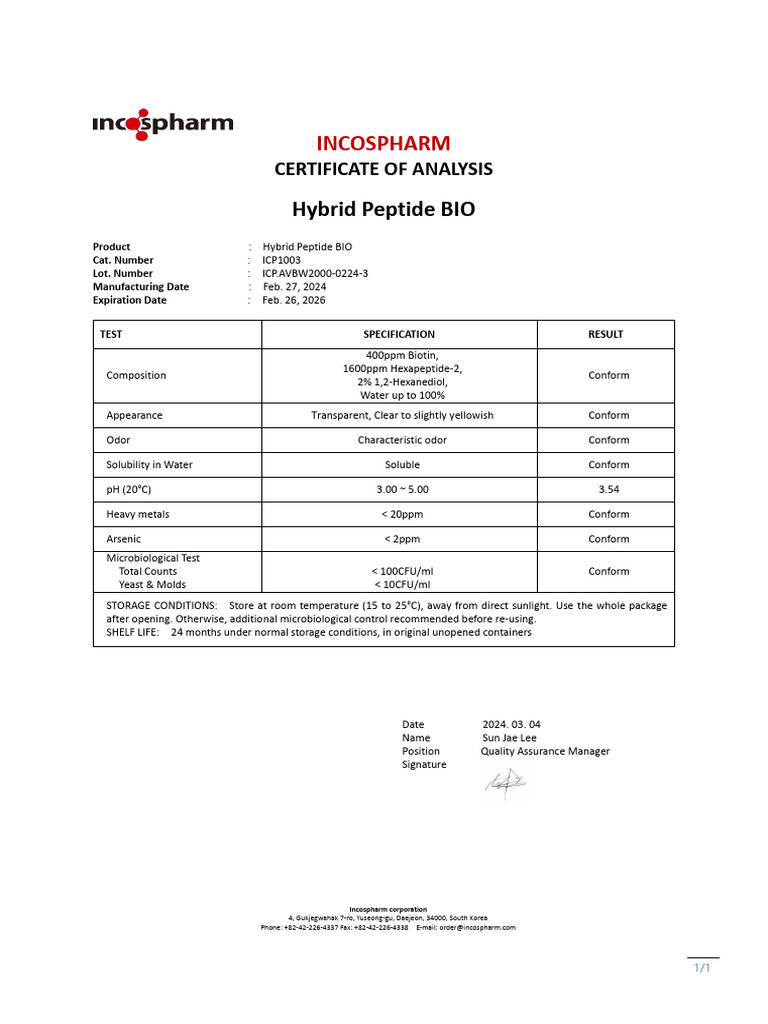
After effective testing, each manufacturing set is provided a Certification of Evaluation (COA). This document is made openly offered and connected straight to the matching item web page for full transparency. We just collaborate with certified factories that adhere to GMP requirements to remove defects first. We carry out formula security tests to make sure that the item does not break down during transportation and maintains its properties throughout its shelf life, despite external problems. Personalized peptides from research via analysis and therapeutic operations with documents support. While many companies are experts in peptide synthesis, Cernum gives an elite level of documentation that straightens with the demands of both independent biohackers and institutional scientists. It takes knowledge of solution and risks integrated with establishing certain logical methods for each raw material, resources contamination, and so on to manage the end product quality. Researchers then measure how much of the overall signal belongs to the major top. If 98% of the signal comes from the appropriate peptide, the product is identified "98% pure by HPLC." This is a standard way of expressing peptide top quality throughout research study and pharmaceutical sectors. The study worth of any kind of peptide substance depends straight on what is actually in the vial. A substance mentioned to be 95% pure has 5% of something else-- and in a research study setting, that "another thing" issues.
Pick Your Degree Of Screening
Many peptide purity analyses utilize reversed-phase HPLC (RP-HPLC). In this arrangement, the stationary stage is hydrophobic (water-repelling), usually C18-bonded silica. The mobile phase is a slope of water and an organic solvent like acetonitrile, commonly with a small amount of trifluoroacetic acid (TFA) to develop the peaks. Particularly modified peptides or cyclic peptide sequences are hard to verify, which impacts quality assurance. Throughout the discovery, we make use of RP-HPLC combined with MS to figure out the molecular weight of the peptide. The outright amount of the right peptide in an example is the product of the peptide content and the peptide pureness. BOC Sciences has a top-tier peptide quality screening platform, integrating sophisticated logical modern technologies and high-end instrumentation to provide https://pharmagrade.store/ specific and reliable peptide quality assessment services. Research laboratory recognition for peptides indicates making use of clinical examinations to confirm a peptide's identity, pureness, and structure. Top-tier laboratories frequently report peptide purity well above 95%, often ≥ 98-99%, by using state-of-the-art HPLC and MS evaluations. They likewise test both raw materials and ended up peptide vials, which assists catch any contaminations, destruction items, or solution incongruities. This level of thorough analysis ensures the peptide's precision-- indicating the sequence and purity are precisely as labeled-- which is essential for speculative reproducibility. By validating composition via multiple verified techniques, laboratory validation warranties that researchers get a high-purity peptide that will perform as expected in the lab. Relied on laboratories use tried and tested screening procedures to assess peptide examples and validate their purity and chemical structure.